
Gambling Addiction in the Philippines: Signs and Help
Recognise gambling-related harm, prepare for a support conversation and find verified Philippine contacts, with a separate route for immediate danger.
Verification notes
- Checks
- Describe concrete changes in finances or wellbeing when asking for a professional assessment.
- Warning signs
- Chasing losses, borrowing or selling possessions to gamble, and harm to wellbeing are reasons to discuss support.
- Next steps
- Seek a healthcare assessment; warning signs are not a diagnosis or a severity score.
If gambling is becoming difficult to control or is affecting your household, seek help now; you do not need a diagnosis before starting that conversation. In the Philippines, you can approach a healthcare professional, the National Problem Gambling Helpline or a local peer-support group. Ask which kind of help each service provides.
If you or someone else is in immediate danger, contact local emergency services or go to the nearest emergency department. Do not wait for a helpline callback or exclusion application.
Source check: . This guide explains gambling addiction concerns, warning signs and Philippine help routes.
- Describe what has changed in your life rather than trying to score yourself.
- Use Philippine contacts for local support; UK resources below explain health topics.
- Ask separately about treatment, peer support and restrictions on gambling access.
What does gambling addiction mean?
People often use “gambling addiction” to describe gambling that feels difficult to stop. The WHO describes gambling disorder through impaired control, gambling taking priority over other activities and continuing despite harmful consequences. Harm can also happen below the threshold for a clinical diagnosis.
A healthcare professional can assess your situation. This article does not diagnose you or assign a severity score. You do not have to settle on a label before saying, “This is affecting me, and I need help.”
Warning signs worth discussing
The NHS identifies concerns including chasing losses, needing larger bets, borrowing or selling possessions to gamble, and harm to finances or wellbeing. These are reasons to seek support, not a checklist that can rule a disorder in or out.
For an appointment, replace broad statements with an example. Instead of “Things are bad,” you might say, “I used money for a bill and then gambled again because I wanted to replace it.” Add what you need today, such as help with food, sleep or a difficult conversation. You can bring notes and read them aloud.
Illustrative scenario: Carlo says he cannot have a problem because he does not gamble every day. Yet he is worried about a missed payment and hiding it from his partner. He does not need to win an argument about the word “addiction” before asking for an assessment. The missed payment and his concern are enough to explain why he is seeking help.
Where to ask for help in the Philippines
National Problem Gambling Helpline
The NPGH website lists (02) 8248-9568 and describes counselling support, information and referrals for individuals and families. It explicitly says it is not an emergency crisis hotline or a financial-assistance service. The number was checked against its website, not tested by calling.
For a first call, you could say: “I am in the Philippines and want help with gambling. What happens after this conversation?” Ask whether a referral is needed, what costs may apply and whether support is available in your preferred language. Do not assume a website listing confirms an appointment or immediate response.
Gamblers Anonymous Philippines
Gamblers Anonymous Philippines lists in-person and online meetings, +63 915 938 2808 and talktous@gaphilippines.com. Contact the group to confirm a meeting before travelling or joining. This is a peer-support route, not a substitute for emergency care or an individual clinical assessment. We have not attended a meeting or tested a response.
It is reasonable to ask what a first meeting involves, whether you can listen before speaking and what privacy expectations apply. Use the organisation’s current instructions rather than a meeting link forwarded by an unknown account.
A healthcare professional
Ask a doctor or mental-health professional whether they assess gambling-related concerns or can direct you to someone who does. Tell them about urgent safety concerns first. A useful question is: “Who should I contact if I feel worse before our next appointment?” Get that answer before leaving if you can.
What treatment conversations can cover
WHO identifies cognitive behavioural therapy and motivational interviewing as treatment approaches for gambling disorder. The NHS explanation of CBT describes working with a therapist on links between situations, thoughts, feelings and actions, with practice between sessions. These references do not establish local availability, cost or a guaranteed result.
Bring questions that help you understand the proposed care: What are we trying to change? How will we review progress? What should I do between appointments? If a service proposes a treatment you do not understand, ask for an explanation before agreeing. This guide does not recommend a medicine or a particular course length.
NICE advises continuing support and responding to relapse without treating it as personal failure. If you return to gambling, contact your care provider about the next step. A return to gambling is a reason to seek support, not hide from it.
If you are supporting someone else
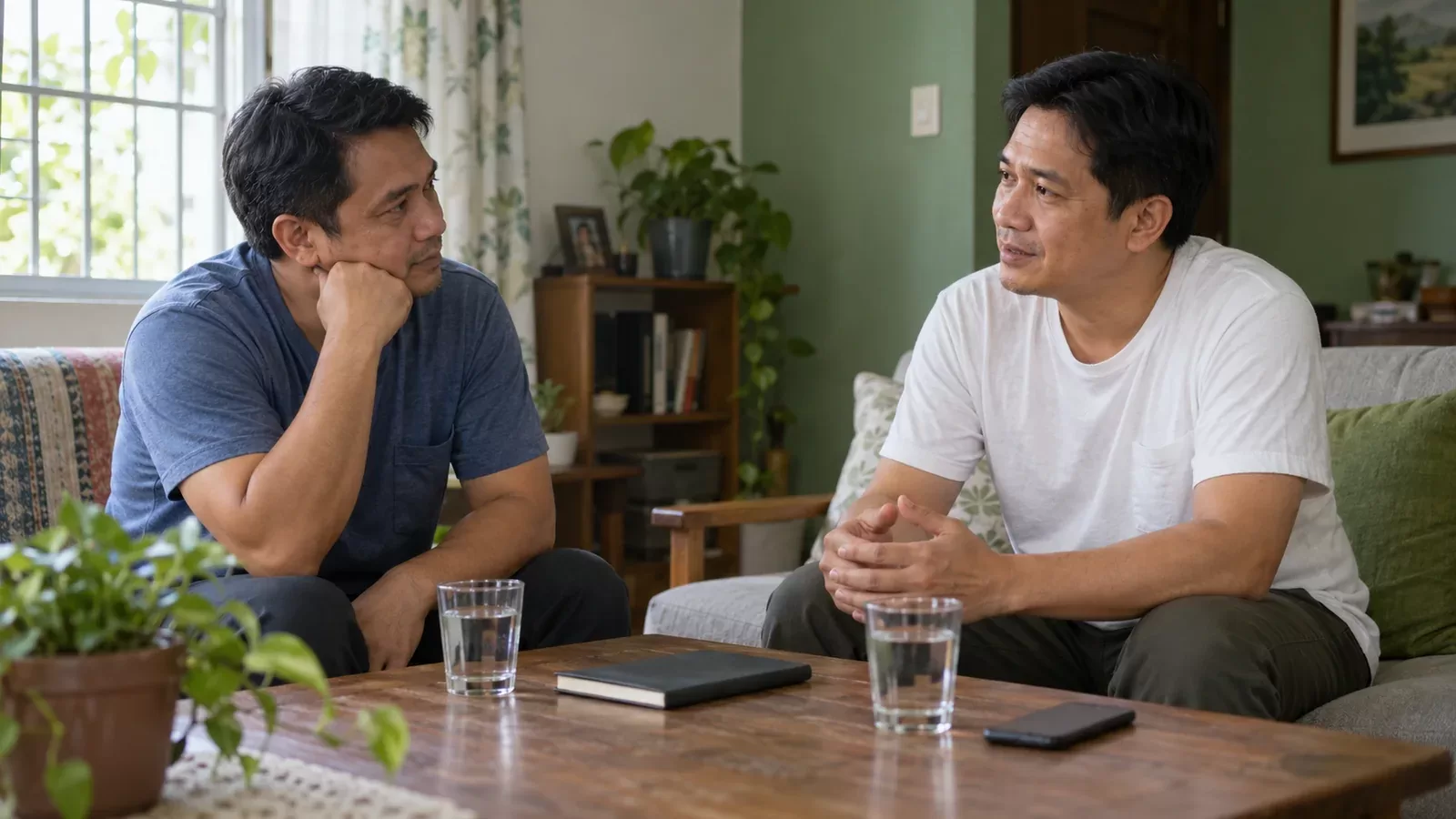
Try an observation and an offer: “I noticed the bill is unpaid. Would you like me to sit with you while you contact support?” Avoid demanding a confession or calling the person irresponsible. You can ask for advice for yourself even when your relative is not ready for a conversation.
Illustrative scenario: Dina wants to help her brother but cannot cover another payment. She offers to help organise his questions for a service and says clearly that she cannot lend money. This is a sample conversation, not a rule for every family. If talking would put you in danger, seek help for your own safety first.
For formal access restrictions, see our responsible gambling and exclusion guide. For a practical personal plan, read how to reduce the risk of gambling harm. Our player-protection page covers separate account and payment concerns; LEGITCASINO does not provide treatment or issue exclusion orders.
Editorial methods and corrections